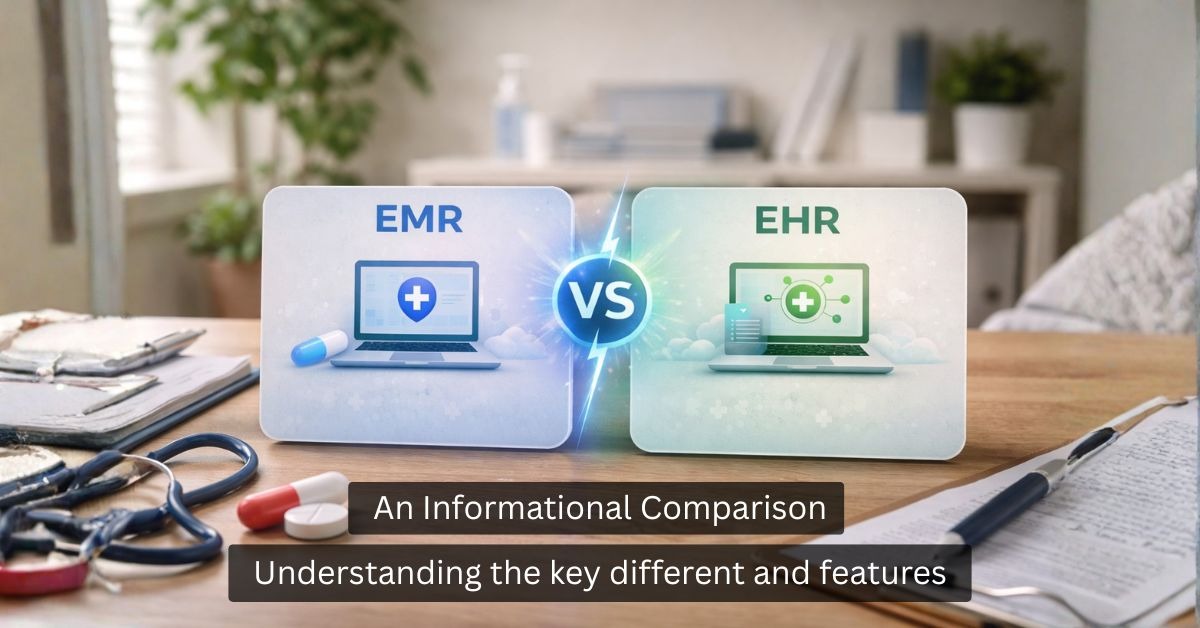
EMR vs EHR: An Informational Comparison
Introduction
Healthcare industries have completely transitioned in this modern age to manage their clinical operations and administrative tasks, which is why EMR EHR software has been created to match the workflow of the present medical sectors. These software platforms have entirely wiped out the need for paperwork, physical labor, and administrative stress. These electronic records can revolutionize coordination, data exchange, information storage, data access, and security. Through EHR EMR software integration, practitioners can easily focus on providing optimal patient care rather than dealing with administrative tasks. These electronic records provide the precision in your workflow that is the core of healthcare facilities.
Furthermore, these terms EMR and EHR can be used interchangeably, but there are some noteworthy differences. To assist you in your deeper dive into the software details of these electronic records, we have created this EHR vs EMR guide.
EMR vs EHR: History
In 1992, both of these systems were made, which we now know as EMR software and EHR systems. These systems are designed to revolutionize modern medical practices with robust managerial aspects. The reported stats inform us that in 2019 that the specialists utilized Electronic Health Record EHR software were 72% which was then increased to 78% by the beginning of 2023.
What is EMR?
EMR definition:
It is abbreviated as Electronic Medical Record, but there is more to the functionalities than just the EMR meaning. This platform is used to store information about one patient, which includes outcomes, progress, billing, histories, vaccination dates, allergies, prescriptions, and diagnosis.
Explanation:
The EMR system is also capable of connecting the whole organization through increased coordination means. Providers integrate this system to decrease their administrative overhead, better synchronization, reduce human error in keeping records, and improve managerial aspects. Moreover, this software significantly aids in the revenue stability and provides in-depth reports to assess the overall practice performance. Practitioners truly appreciate a tool that can allow them to provide optimal patient care, considering they can readily access the patient data, enabling them to make informed decisions.
EMR systems can improve the participation of different practitioners within an organization so they can collaborate on complex cases and access data as per their convenience. These software tools save a lot of money, which could have been spent on hiring a workforce just to manage administrative duties.
EMR Systems List:
The EMR systems list is long, but here are a few examples:
- Allscripts
- Athenahealth
- DrChrono
- Praxis EMR
- Centricity EMR software
- iPatientCare
- AdvancedMD
- Others
If an organization demands free EMR software, there a plenty of options in the software market like OpenEMR, FreeMed, etc.
What is EHR?
EHR definition:
EHR software is abbreviated as Electronic Health Record, and it can perform everything an EMR software can, but more. This solution establishes a link or connects different departments or, on a larger scale, different organizations for secure data exchange. The patient’s health records include laboratory reports, medications, histories, visual data, diagnostic results, and treatment progress notes.
Explanation:
EHR systems are a better version of EMR due to interoperability. This platform allows the automatic transfer of all the patient’s medical records to their current provider from the former one. These software solutions provide secure data exchange capabilities among different healthcare settings and organizations for improved treatment outcomes. These systems allow different specialties, medical sectors, and laboratories to be connected through a unified hub. While data is accessible through these electronic records but through an EHR, patients and practitioners can both leverage real-time information visualization. Enterprise-level medical organizations usually demand health record systems due to an immense need for fast information exchange among different settings, departments, and other organizations.
EHR Systems List:
The EHR/EMR software list is usually the same, considering most products have both integrations, but here are some specific EHR software:
Free EMR software options also include EHR functionalities.
EMR vs EHR: Main Differences
Data Integration
EMR:
All patient data is managed within the healthcare system, but does not include support integration with other settings or organizations. The type of data supported by EMR software is clinical.
EHR:
These systems support various types of data, including clinical, financial, and administrative.
Data Exchange
EMR:
The primary mode of data exchange is limited to the staff of a single healthcare organization.
EHR:
It helps in the convenient sharing of patient data and medical histories among various healthcare organizations and medical practitioners.
Data Accessibility
EMR:
Data is accessible to an authorized individual within the organization.
EHR:
Data is accessible to the authorized individuals among different healthcare providers and organizations
Scope
EMR:
Emphasize the patient’s medical records within the healthcare organization.
EHR:
Patient data can be collected from various sources, like laboratories, radiology centers, and other medical sectors. The collected data is then comprehensively stored and can be viewed by different medical practitioners.
Continuity of Care
EMR:
Clinical data will always remain in the database within the organization, which makes it easier to access data for making informed treatment strategies.
EHR:
All the medical data of patients is retained and can be shared across different healthcare organizations, making continuity of care streamlined.
Interoperability
EMR:
This aspect is rather limited in all EMR softwares with no integrated EHR due to the restriction of the information within the business database.
EHR:
This aspect is the most useful when it comes to interoperability, considering it aids in the data exchange among different healthcare organizations and providers.
EMR vs EHR: Benefits
Boosted Patient Satisfaction
EHR/EMR software ensures patient satisfaction by providing them with the communication means that allows them to collaborate with their healthcare provider without any hassle. Patients can easily look at their medical reports without going through the trouble of receiving them in person. These systems also empower patients to actively participate in their treatment journey. They can collaborate with a physician in the treatment strategies and request medication refills conveniently.
Improved efficiency
EMR systems can revolutionize a business by providing it with the capabilities of attending to more patients in a day. These systems managers handle all the administrative overhead and practice managerial aspects, saving a significant amount of time from the practitioners’ busy schedules. Making the patient’s clinical data always accessible makes the practitioners always informed and assists in creating an outcome-oriented care strategy.
Mobility and Accessibility
The revolution EHR has brought to the healthcare industry is commendable, making patient data easily accessible and portable. Providers can always visualize patient records as per their convenience, optimizing the treatment process through their handheld device. Data accessibility also allows readers to update the information in real time, so no data can be lost during the time they arrive at the premises.
Data Security
EHR Electronic Health keeps the patient records secure in the database and also allows authorized access without privacy breaches. Health-related data is always considered sensitive, but this system ensures that the practitioner and patient know that all the clinical information is retained safely in the database.
Cost Effectiveness
Incorporating EHR records in the practice system allows the organization to save a lot of money, as no large amounts are spent on external coordination tools, paper prints, workforce salaries, and data transfer. These tools eradicate all those requirements, significantly enabling healthcare providers to focus on patients with better quality and less expenses due to robust automation. Moreover, expenditure on the administration and record management gets reduced due to the digitization.
Safe Data Exchange
EHR software development has the main purpose of making data transmission safe and secure. EHR encompasses multiple organizations, which makes data protection a core requirement of this system. It eliminates the risk of unauthorized access and privacy breaches during data exchange.
Quality Patient Care
This system improves the efficiency of the practitioner to create an outcome-oriented patient care plan through conveniently accessible patient data. EMR rating is off the charts when it comes to increasing the probability of better clinical outcomes. Moreover, practitioners can easily coordinate with other providers for more opinions on the clinical matter while designing a care plan.
Analytical Reporting
EMR EHR, both systems are loaded with robust functionalities just like this one. Analytical reporting analyzes the whole metrics of population health and public health issues at present to provide practitioners with better diagnostic capabilities. These capabilities also empower organizations to deal with these issues and generate a disease control plan.
Clinical Data Access
EMR Medical manages the patient through its comprehensive suite of functionalities and encourages better synchronization among care team members. Through remote data access, practitioners can always look into the records and update them. Furthermore, patients can also access their medical records at their convenience to engage with their treatment journey.
EMR vs EHR: Limitations
Regular Updates
When organizations integrate Medical EHR software with the database of their system and other settings like laboratories, specialties, pharmacies, and radiology centers, a requirement for frequent updates arises. There is a lot of information arriving in the systems of the organization, and the updates are necessary so that no important clinical data is lost. That data might include scheduled appointments, lab reports, diagnostic results, progress notes, etc. Even though adding all that new information to the relevant profiles can be a daunting and time-consuming task.
Hacking Issues
Some EMR systems might have some security-related issues, but not all. Some systems are more prone to being hacked than others, which depends on the service provider. Some healthcare practitioners fell victim to hackers when all the patient data and some other sensitive information were stolen in 2017. When choosing the best EMR for small practice, the relevant company’s claims on data security should always be taken into account.
Maintenance Expense
Companies incorporating EHR in their systems do face some financial challenges, like upfront costs, implementation prices, integration expense, regular maintenance costs, etc. To ensure the system runs smoothly, these are the amounts organizations have to pay. It is the reason that mostly healthcare businesses, especially startups, don’t usually adopt software for their managerial optimization.
Crucial Updates
Updates are a must for your business’s needs, and its clinical operations streamlined. If the clinic has been utilizing the same EMR software for years without updating will make the system not scale with the overall practice. Outdated systems can never keep up with the rising workload and technological advancements. However, this restriction is massively avoidable through regular system updates.
Privacy Breaches
When there’s a mistake in adopting certified and best EHR software, then the businesses can face privacy breaches. Mostly, these systems keep the record safe and secure through encryption and authorized access. But occasionally, there might be issues with data security and hackers that demand the relevant medical personnel to stay attentive to these threats. Organizations should only deal with the software companies that provide only the best privacy measures.
Less Interoperability
Interoperability is a major disadvantage of an EMR software that has no EHR capabilities integrated with the database. It is necessary that practitioners and healthcare organizations can integrate their software database with the systems of other healthcare sectors. Without interoperability, patient care can be delayed, and the operations will lack the required optimization.
EMR vs EHR: Importance
EMR systems meaning is to empower the healthcare business and medical practitioners with crucial managerial aspects. Both of these medical and health record systems can manage patients, data, and practice, providing you with optimized clinical operations. The capabilities these platforms provide are increased patient care, streamlined clinical operation, financial stability, population health management, cost-effectiveness, information safety, and enhanced business reputation.
EMR vs EHR: What should be chosen?
We have stated the differences between EMR and EHR adopted by the healthcare professionals, but both of these systems are integrated into the systems of their practices for exceptional benefits. Software for EHR has more pros when it comes to interoperability, but EMR software is not any less when it comes to data storage. The usage and the integration of these software platforms are always according to the organizational needs.
EHR meaning is to provide the larger picture of the patient data that can significantly aid in curating outcome-oriented treatment strategies. This system allows better coordination among various organizations, robust data monitoring, etc. Meanwhile, EMR software is specifically used to store relevant patient data that can be assessed later for making better treatment strategies, viewing histories, and updating data.
In Conclusion
If you are searching for an EHR and EMR that can be integrated into your healthcare business database, then Codatis is the best website for that. You can get the right software fit in the category of EMR and EHR that is suitable for your healthcare practice. The offered relevant products are loaded with automated practice management, medical billing, and RCM aspects that can guarantee quick business productivity. Surpass your expectations by connecting with us through this number (347) 696-2641 and get ready to have an intuitive digital asset that can take your business to new heights.
Frequently Asked Questions (FAQs)
Q: Can telehealth capabilities be supported by EMR systems?
A: Yes, telehealth capabilities are supported by EMR systems that with HIPAA and telehealth integrations.
Q: Does EHR Electronic allow data accessibility to patients?
A: Indeed, EHR do allow patients to have access to their medical data, like laboratory reports, diagnostic results, prescriptions, and treatment progress notes, through an intuitive online portal. These platforms increase patient engagement, and they can also educate themselves about their condition through the EHR tutor.
Q: What is the general difference between EHR systems and EMR software?
A: EMR software is a charting system that digitally stores patient information and provides increased data accessibility to the providers within a healthcare organization. EHR systems, through increased collaboration among different practitioners and medical organizations, enable outcome-oriented decision-making.
Q: EMR vs EHR: Which is more budget-friendly?
A: EHR software has better features that can be cost-effective when there is no need to integrate more software products into the practice database. EMR system is initially cheaper than the EHR, which makes it a popular choice among startups.
Q: What is the most opted for EHR software by the healthcare organizations?
A: The most opted for EHR systems across the U.S are Cerner, AthenaOne, Epic, NextGen, and many others. All of these products are loaded with features like collaboration means, medical billing, and HIPAA compliance.
Q: Is EMR still preferred over EHR by the medical Practices?
A: Certainly, there are the best EMR for small practices that can cater to all their requirements. Solo, independent, startups, and small medical practices can leverage EMR due to the decreased need for interoperability. Later, these practices can integrate EHR for better data access and collaboration.
Q: Why is HIPAA compliance needed for EHR EMR software?
A: HIPAA compliance is necessary, considering these systems are used for detailed and prolonged recordkeeping. These compliance aids in data security, prevent privacy breaches, provide control to authorized personnel, and allow safe data exchange. Clinical and financial data need extra protection from hacking and unauthorized access.