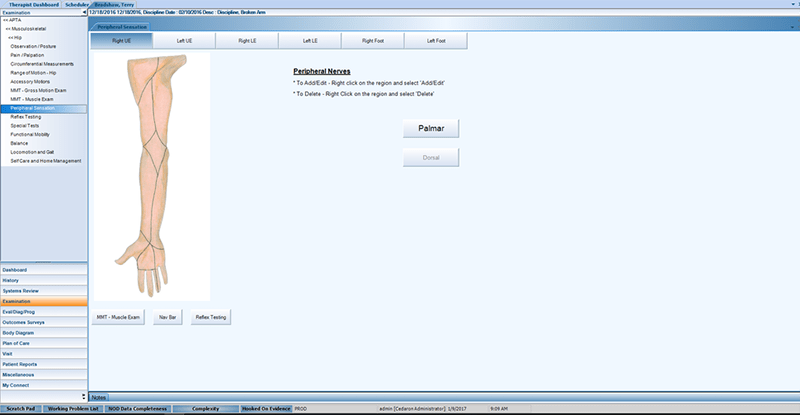
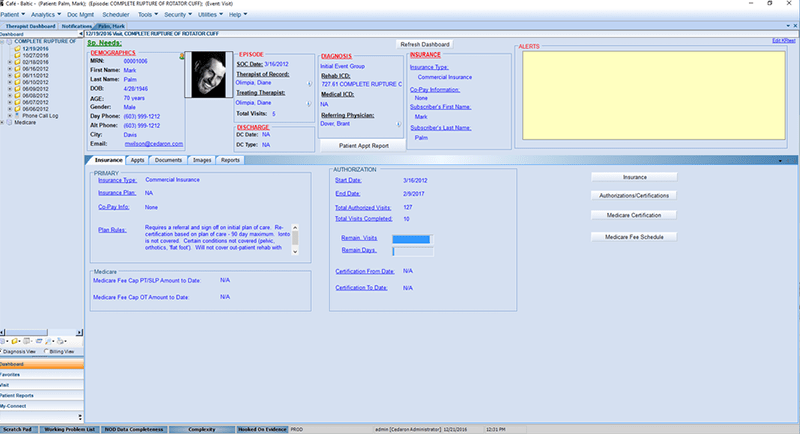
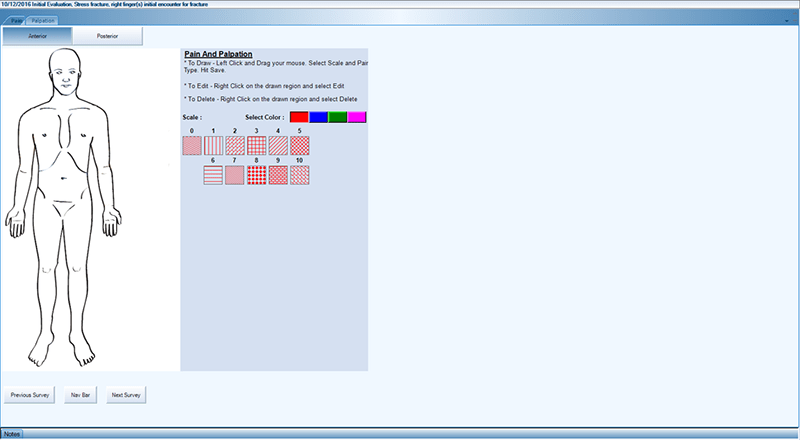
APTA Connect is a point-of-care patient record system designed around rehabilitation care. It gives therapists specialty documentation tools rather than forcing physical therapy work into a general medical chart. The system includes patient registration, demographics, examinations, plans of care, treatment programs, progress records, outcome measures, correspondence, and administrative reports.
Its templates cover body areas and clinical systems. Individual users can adjust forms and workflows to reflect their experience, training, and documentation preferences. Information entered once can populate later visits, letters, reports, and payer communication. This helps teams maintain consistent records and spend less time copying the same patient details across separate documents.
Organizations comparing physical therapy EHR software can consider APTA Connect when they need detailed rehabilitation content, flexible reporting, and links with wider hospital systems.
APTA Connect Pricing and Benefits
APTA Connect Pricing is not provided on standard monthly plans. The pricing depends on users, locations, specialization modules, hosting & other interfaces, implementation and migration costs, training costs, support costs (annual or monthly), and billing data types.
The platform improves documentation consistency, organizes scheduling, supports payer requirements, and reduces duplicate entry. Alerts track progress reports, authorizations, recertifications, and required documents. Charge calculations, coding edits, and billing connectivity support clinical and financial handoffs.
For hospital departments, interoperability can help rehabilitation records move into the organization’s permanent clinical record. For private practices, the system can operate as a standalone documentation, scheduling, and reporting environment.
Want to organize your clinic operations? Get your demo with the Codatis team today!
Users of APTA Connect Software
APTA Connect supports PT, OT, speech-language therapists, rehabilitation directors, billers, and managers. It suits private clinics needing a specialty system and hospitals wanting rehabilitation depth beside an enterprise EHR.
Teaching facilities can use full documentation workflows for supervised clinical education rather than relying on a restricted demonstration environment. Multisite organizations can manage schedules, reports, and workflows across locations.
The software is ideal for clinics in need of flexible therapy notes, Medicare alerts, progress tracking, telehealth capabilities, and interoperability with other systems.
APTA Connect Integrations
APTA Connect can exchange information with major hospital EHR environments without replacing the hospital’s core record. An ADT interface can bring patient demographics from the primary registration system into the rehabilitation chart. A permanent clinical record interface can send completed evaluations and reports back to the wider patient record.
A billing interface creates charge information with edits, codes, and modifiers, then sends it to an existing billing system. Physician document exchange supports plan-of-care review, feedback, status tracking, and electronic approval. Microsoft Office connections support editable documents and operational exports.
Cedaron reports hundreds of interfaces with leading healthcare systems. Buyers should not consider every platform, module, version, or field works automatically. Confirm interface type, exchange direction, ownership, testing, fees, and support during evaluation. This review step protects budgets and prevents unexpected technical work after contract signing.
How Does APTA Connect Work?
Staff register a patient directly or receive demographic information through an ADT connection. They book appointments by therapist, clinic, room, or equipment.
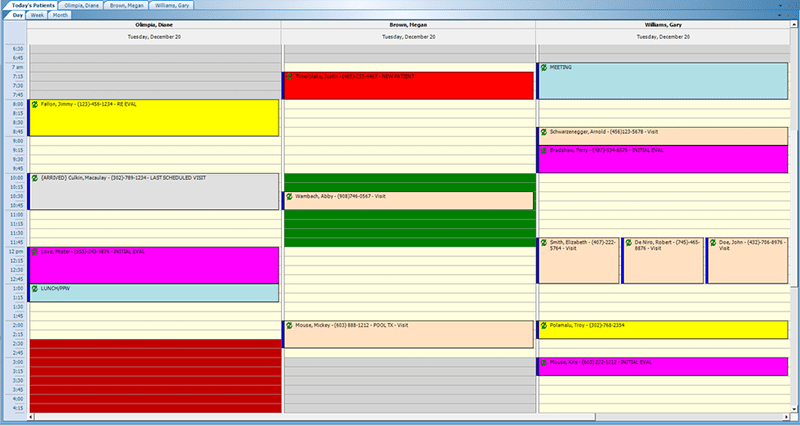
Repeat visits are scheduled by the scheduler, color-coding visits, accommodating a waitlist, and keeping track of cancellations. If two visits are double-booked, the system will also alert staff, and front-desk personnel receive an alert when a patient arrives. The therapist records the results of an assessment and makes observations that will be included in the examination as well as tests and measures, goals, interventions, and a care plan, all recorded during a visit.
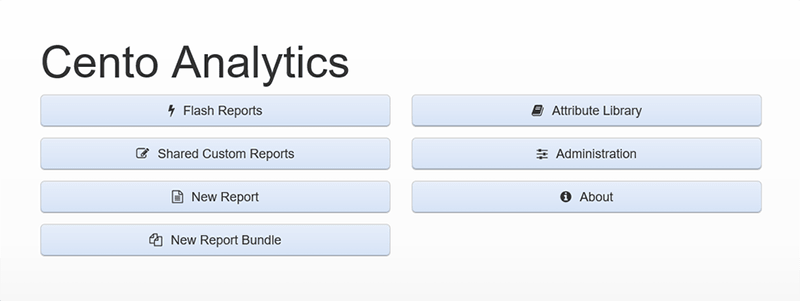
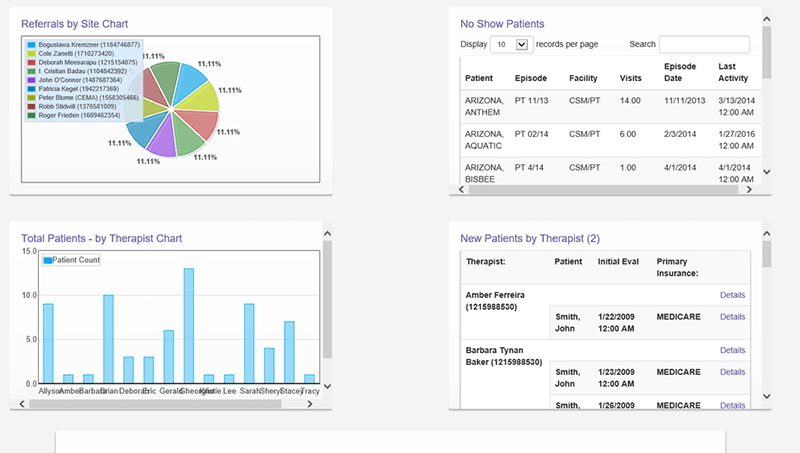
Completed information can support progress reports, physician letters, payer documents, charges, dashboards, and practice reports. Managers can review referrals, utilization, patient progress, appointment activity, clinician performance, and treatment outcomes. Teams can also build ad hoc reports without relying only on fixed templates.
Choose APTA Connect for Physical Therapy Practice Management
Choose APTA Connect for physical therapy practice management when a general EHR does not provide enough rehabilitation detail. The platform addresses a common operational gap: the main hospital record manages enterprise data, while therapy teams still need specialty examinations, outcome measures, treatment plans, compliance prompts, scheduling, and flexible reports.
APTA Connect also suits organizations that want deployment control. Buyers can evaluate local or hosted infrastructure instead of assuming a cloud-only model. This makes server responsibility, remote access, backups, security, upgrades, and IT support important parts of the buying decision.
Compared with basic charting, the platform offers deeper therapy content and reporting. Compared with a general enterprise EHR, it focuses on outpatient rehabilitation. Buyers should compare cost, implementation, billing, telehealth, interfaces, and training before choosing it.